
Accessibility in Web Design: What You Need to Know
Introduction
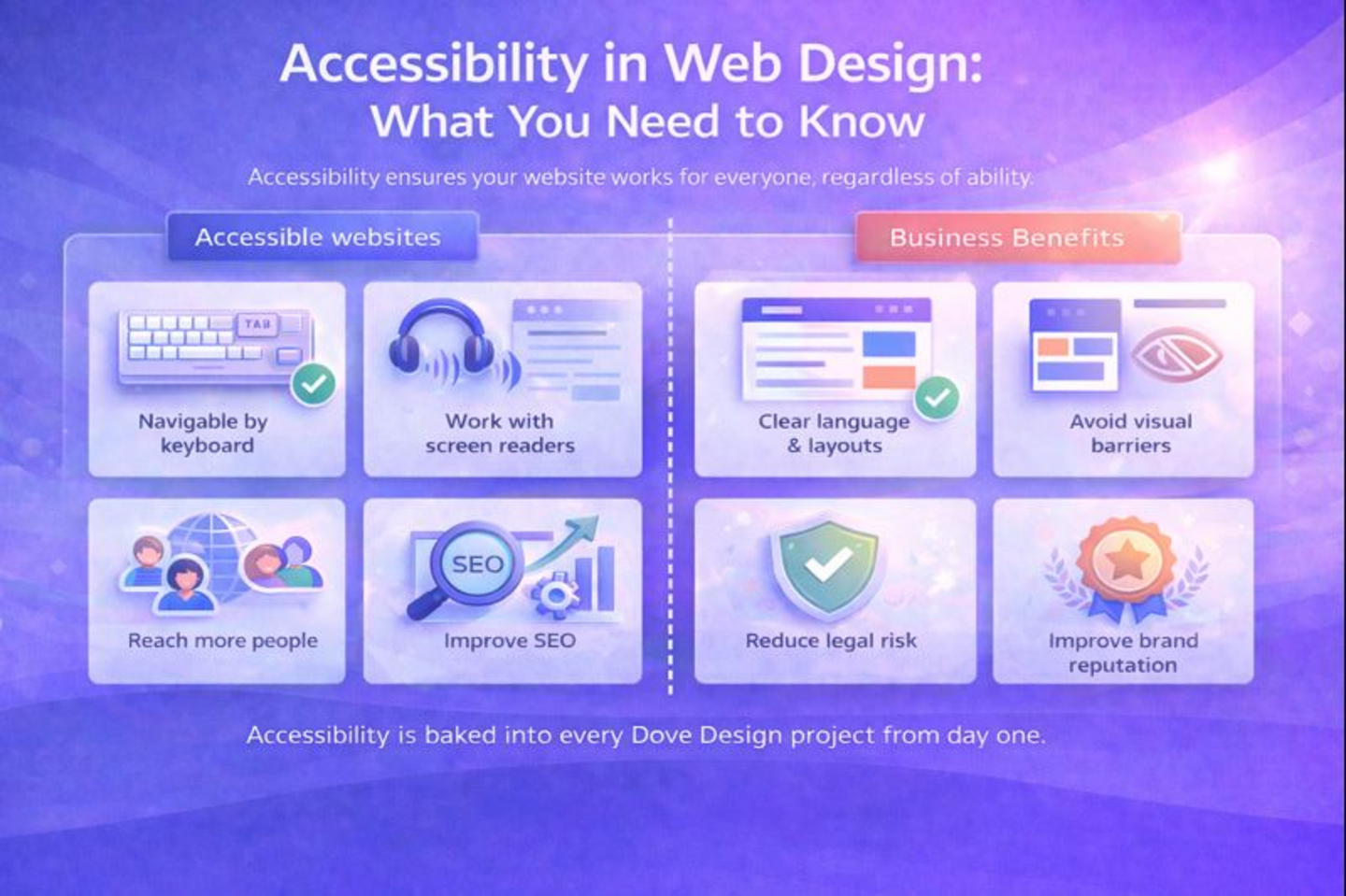
Accessibility in web design ensures that your website can be used by everyone, regardless of ability, device, or circumstance. This includes people with visual, hearing, motor, or cognitive impairments, as well as users who rely on assistive technologies or alternative ways of navigating the web.
For businesses, accessibility is no longer a “nice to have”. It’s an essential part of creating a modern, professional website that delivers a positive user experience and meets growing expectations around inclusivity and usability.
What Accessibility Really Means
Accessibility isn’t about limiting creativity or adding unnecessary complexity. It’s about removing barriers so more people can access your content, understand your message, and take action.
An accessible website is one that:
Can Be Navigated Using a Keyboard
Not all users can use a mouse or touchscreen. Accessible websites allow visitors to navigate menus, links, and forms using a keyboard alone, with clear focus states that show where they are on the page.
Works With Screen Readers
Screen readers convert on-screen content into speech or braille. Proper heading structure, descriptive links, and meaningful alt text ensure that users can understand the content and navigate the site logically.
Uses Clear Language and Layouts
Simple language, consistent layouts, and well-structured content help users with cognitive impairments — and also make websites easier to scan and understand for everyone else.
Avoids Visual Barriers
Good colour contrast, readable font sizes, and clear spacing ensure that content remains legible for users with visual impairments or colour blindness, as well as those viewing the site on smaller screens or in poor lighting conditions.
Why Accessibility Matters for Businesses
Accessible design isn’t just the right thing to do — it also delivers tangible business benefits.
Reach More People
By making your website accessible, you open it up to a wider audience. This includes millions of people who rely on assistive technologies, as well as users on mobile devices or older hardware.
Improve SEO
Many accessibility best practices overlap with SEO best practices. Clear headings, structured content, descriptive links, and alt text all help search engines better understand and rank your website.
Reduce Legal Risk
Accessibility legislation and standards continue to evolve. While not all businesses are legally required to meet full WCAG compliance, improving accessibility reduces risk and demonstrates due diligence.
Improve Brand Reputation
Inclusive websites reflect positively on your brand. They show that your business is thoughtful, professional, and committed to providing a positive experience for all users.
Accessibility and User Experience Go Hand in Hand
It’s important to understand that accessibility doesn’t only benefit users with disabilities. Features such as clear navigation, readable text, and logical page structure improve usability for everyone.
Accessible websites are often:
- Easier to use
- Faster to navigate
- More intuitive
- More likely to convert
In short, accessibility and good UX are closely connected.
Our Approach at Dove Design Ltd
At Dove Design Ltd, accessibility is baked into every project from day one — not added as an afterthought.
Our approach includes:
- Structuring content with proper heading hierarchy
- Designing with sufficient colour contrast and readability
- Building keyboard-friendly navigation and forms
- Considering accessibility during design, development, and testing
By integrating accessibility into our web design process, we create websites that are inclusive, future-proof, and better for both users and businesses.
Final Thoughts
Accessibility in web design is about creating websites that work for real people in the real world. It improves usability, strengthens your brand, supports SEO, and ensures your website can be accessed by as many users as possible.
If you’re planning a new website or reviewing an existing one, accessibility should be a core part of the conversation — not an optional extra.
Web Design Experts
Empower Your Online Identity with Tailored Design Magic

FAQs
Got questions? We’ve got answers! Explore our FAQs to learn more about our web design process, services, and how we can help bring your digital vision to life.
Yes. All Webflow sites have SSL included in their hosting plans.
We believe in collaborative design. Our process includes client consultations, feedback sessions, and regular updates. We ensure your vision aligns with the design, and your input is valued throughout the development process.
At Dove Design we specialise in building websites using Webflow, a modern website platform known for fast performance, strong SEO capabilities and easy content management.
We prioritise mobile responsiveness in all our designs. Our websites undergo thorough testing across various devices and browsers to ensure a seamless user experience on smartphones, tablets, and desktops.
Webflow offers several advantages over WordPress including better performance, built-in hosting, improved security and easier visual editing.
Yes. We offer website maintenance packages to ensure your site stays secure, updated and performing well. Our support packages are tailored to meet your specific needs and can be found on our Pricing page.
To begin a website project we typically need your business goals, brand assets, content and examples of websites you like.
Our agency is distinguished by a combination of creativity, technical expertise, and a client-centric approach. We prioritise understanding your business goals, delivering high-quality solutions, and providing excellent customer service throughout the entire process.Dove Design Ltd is a Webflow-specialist web design agency based in County Durham. We focus on building fast, SEO-ready websites for local businesses and public sector organisations.
Certainly! We specialise in developing e-commerce solutions that include secure payment gateways, inventory management, and user-friendly interfaces to provide a seamless online shopping experience.
Most small business websites take between 3 and 6 weeks to design and build depending on the number of pages and content required.
Extremely secure. Webflow has some of the highest international standards for security which is also constantly being upgraded and monitored. You can read more about Webflow's security here.
Yes. Dove Design works with startups, small businesses and organisations across the UK looking for professional, high-performance websites.
Happy Clients
Hear what our clients have to say about our Webflow services
We couldn’t be happier with the new Flowga Yoga Studios website. The design perfectly captures the essence of our studio, and the user-friendly layout makes it easy for our clients to find class information and schedules. The team was incredibly responsive to our needs, and the ability to update content with ease has made a huge difference for us. This website is a wonderful reflection of our brand and mission!”

Dave at Dove Design built my steel construction business website from scratch. He was attentive and there constantly with innovative ideas and suggestions. It looks corporate and super professional. He’s at the end of the phone for edits and design variations for me. He’s essentially a part of the team. Delighted!
How can we help?
We're here to answer any questions you may have. Contact us today!